
A CLEAR OPERATING RHYTHM
A clear plan. Named owners. Measured progress.
Start with your growth constraint, agree on the work, and keep the strategy connected to the decisions your team makes.
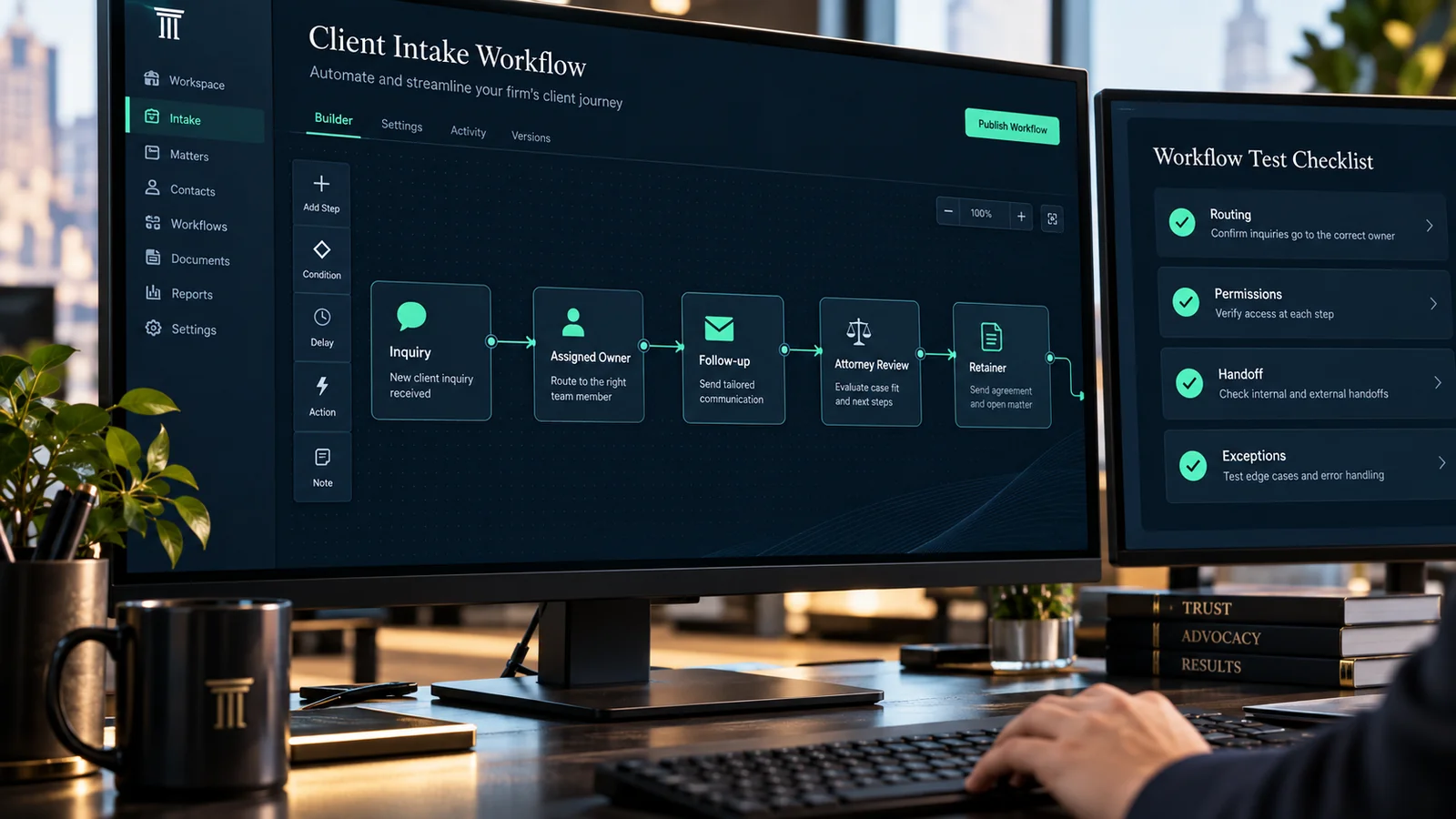
THE WORK, MADE CONCRETE
A defined operating rhythm, not an open-ended retainer.
We make the work visible from the first assessment through the decisions, handoffs and reviews that keep an engagement moving.
HOW WE EXECUTE
Agree the starting point
We clarify the growth objective, known constraints, access requirements and people needed to make the engagement work.
One firm sponsor coordinates access and decisions with Gadient.
What you receive
Scope and baseline requirements
How we check it
The work starts with a defined problem and realistic responsibilities.
Scope, access and responsibilities are agreed for your firm. This describes our service process, not a claim of a particular client outcome.
Develop the team and activate the people behind the firm.
Where included in scope, the plan covers attorney visibility, coaching internal marketers, and grassroots business development alongside paid acquisition. We agree on the outputs, available staff time, and decision rights before committing to activity.
A working cycle can pair a marketing coaching session with a review of upcoming attorney content and community commitments. Every brief, event, and relationship follow-up has a named execution owner. We review quality and business relevance, then adjust the next cycle.
The firm’s attorneys supply expertise and legal approval. Marketing staff and specialists create and distribute work. Designated relationship owners attend meetings and maintain follow-up. Gadient Consulting provides direction, coaching, coordination, and performance review within the agreed engagement.
Explore the scope of attorney personal branding.
Begin with your goals and the decisions ahead.
The first conversation explores where growth has stalled, what the firm can measure, how responsibilities are currently divided, and what leadership wants to change. It establishes whether a focused assessment or ongoing fractional CMO support fits.
Scope, access, timing, fees, outputs, and responsibilities are agreed before the engagement begins. The examples on this site illustrate the working approach; the engagement plan reflects your firm.
Establish the starting point.
Review business priorities, target case mix, spending, partners, available attribution, and the path from inquiry to retained matter. Meet the people who own the work.
The output is a usable baseline, a clear view of the gaps, and the questions the next phase needs to resolve.
The marketing performance audit explains how the initial evidence is examined.
Choose the constraint that matters most.
Rank findings by business importance, supporting evidence, effort, dependencies, and capacity. Fix clear defects while larger decisions are evaluated.
The output is a focused plan with targets, milestones, owners, and leadership decisions. Assumptions and unresolved information remain visible.
Coordinate the people delivering the plan.
Agencies and internal teams work against agreed assignments. Intake and technical changes have responsible owners. Decisions that need the firm’s approval are brought forward with context.
The output is progress that can be inspected: completed work, resolved handoffs, and a record of commitments. We lead coordination within the agreed scope.
Explore the phased actions and decision gates in the 90-day plan.
Compare actual results with the targets.
Review implementation alongside outcomes. If a planned improvement has not been delivered, the result cannot fairly be used to evaluate that change. Account for incomplete data and the time it takes inquiries to become cases.
The output is a decision: continue, adjust, investigate, or stop. Record the owner, due date, and evidence that will inform the next review.
See a target-versus-actual scorecard and the questions it raises for the next review.
Keep responsibility clear.
We lead marketing strategy and executive coordination. Agencies and specialists own agreed production. The intake manager owns daily supervision. Attorneys own legal review and case acceptance. Finance and firm leadership own financial approvals.
Review frequency, implementation support, and approval rights are tailored to the engagement. A useful cadence keeps urgent exceptions moving while preserving time for larger strategic decisions.
Clarify the division of work using the fractional CMO versus agency comparison.
YOUR NEXT MOVE
Give the next phase a clear working plan.
Start with your firm's goals, current structure, and the decision you need to make.
856-357-3540