
Working together
What should happen in the first 90 days with a fractional CMO?
A practical first-phase framework for understanding the firm, setting priorities, coordinating implementation, and reviewing progress.
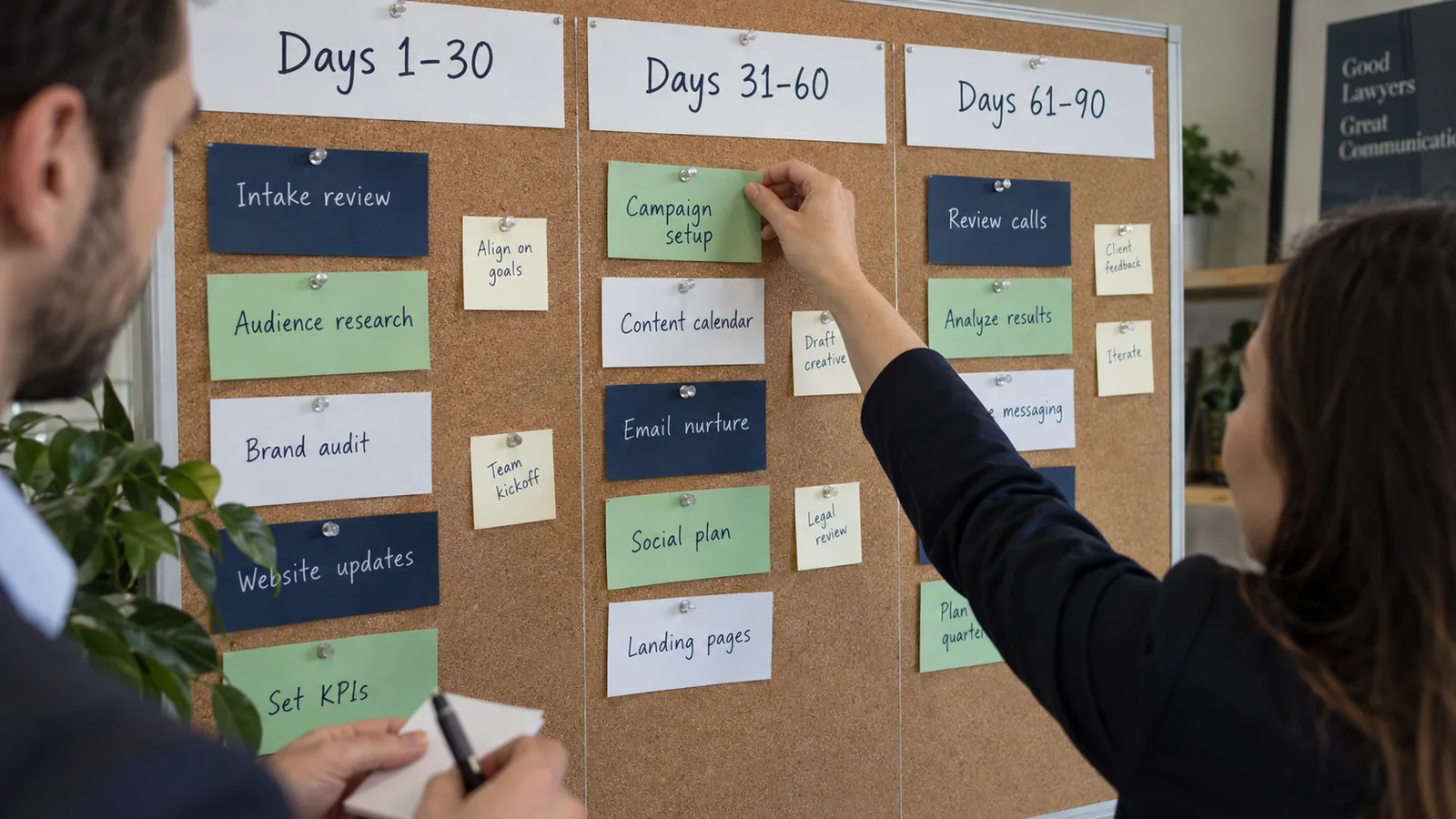
Use a framework, then adapt it to the firm.
The first 90 days should create a clearer picture of the business and establish a working system for improving it. The exact sequence depends on scope, access, team capacity, and what is already in place. We tailor the phases to the firm’s priorities and implementation dependencies.
Before the engagement starts, agree on the priorities, who will participate, what information is available, and how decisions will be approved. This prevents a discovery period from becoming an open-ended search for access and ownership.
First, establish a usable baseline.
Review the firm's goals, practice and market mix, spending, partners, current initiatives, and intake process. Meet the people responsible for execution. Identify where reports agree, where they conflict, and which definitions need to be reconciled.
- A view of current marketing commitments and responsibilities.
- A map of how an inquiry reaches intake and the next team.
- A list of material measurement gaps and operating constraints.
- Agreement on the decisions the first phase needs to support.
When the baseline is unclear, the marketing audit approach shows which evidence to examine first.
Then, choose the first improvements.
Prioritize work based on the business problem, expected value, effort, dependencies, and evidence. Address obvious failures while developing a plan for more complex changes. Do not launch a large set of initiatives simply to demonstrate activity.
A missed inquiry-routing rule may need immediate correction. A new market campaign may need research, staffing, creative, and approval before launch. The working plan should show that difference and assign a responsible person to each action.
Compare the sequence with the 90-day plan.
Put the plan into a repeatable working rhythm.
Coordinate agencies and internal staff around deliverables and decision points. Establish a reporting format that connects work completed to performance and the next action. Bring unresolved questions to the right person promptly.
Track implementation as well as outcomes. If the team has not completed the agreed follow-up changes, a later conversion report cannot fairly evaluate whether those changes worked. A useful operating rhythm makes both the activity and the result visible.
Assign authority using our CMO decision-ownership map.
Close the first phase with decisions.
Review what has changed against the baseline. Identify completed work, early evidence, remaining uncertainty, and the next set of priorities. Some business outcomes will need more time, especially where inquiries convert across reporting periods.
The first phase should leave the firm with more than a presentation. It should establish clearer ownership, a useful working plan, and a practical way to evaluate the next decision. Specific deliverables and dates belong in the engagement scope.
Make staff development part of the plan with marketing-team coaching.
Carry the work forward with a monthly marketing review.
YOUR NEXT MOVE
Let's give your growth direction.
Start with your firm's goals, current structure, and the decision you need to make.
856-357-3540