
POSITIONING YOUR TEAM CAN USE
Law Firm Branding & Attorney Positioning
Define a position that fits the cases you want and the experience your team can deliver. Carry it through your website, advertising, referral conversations, and intake.
THE WORK, MADE CONCRETE
Why should the right client remember your firm?
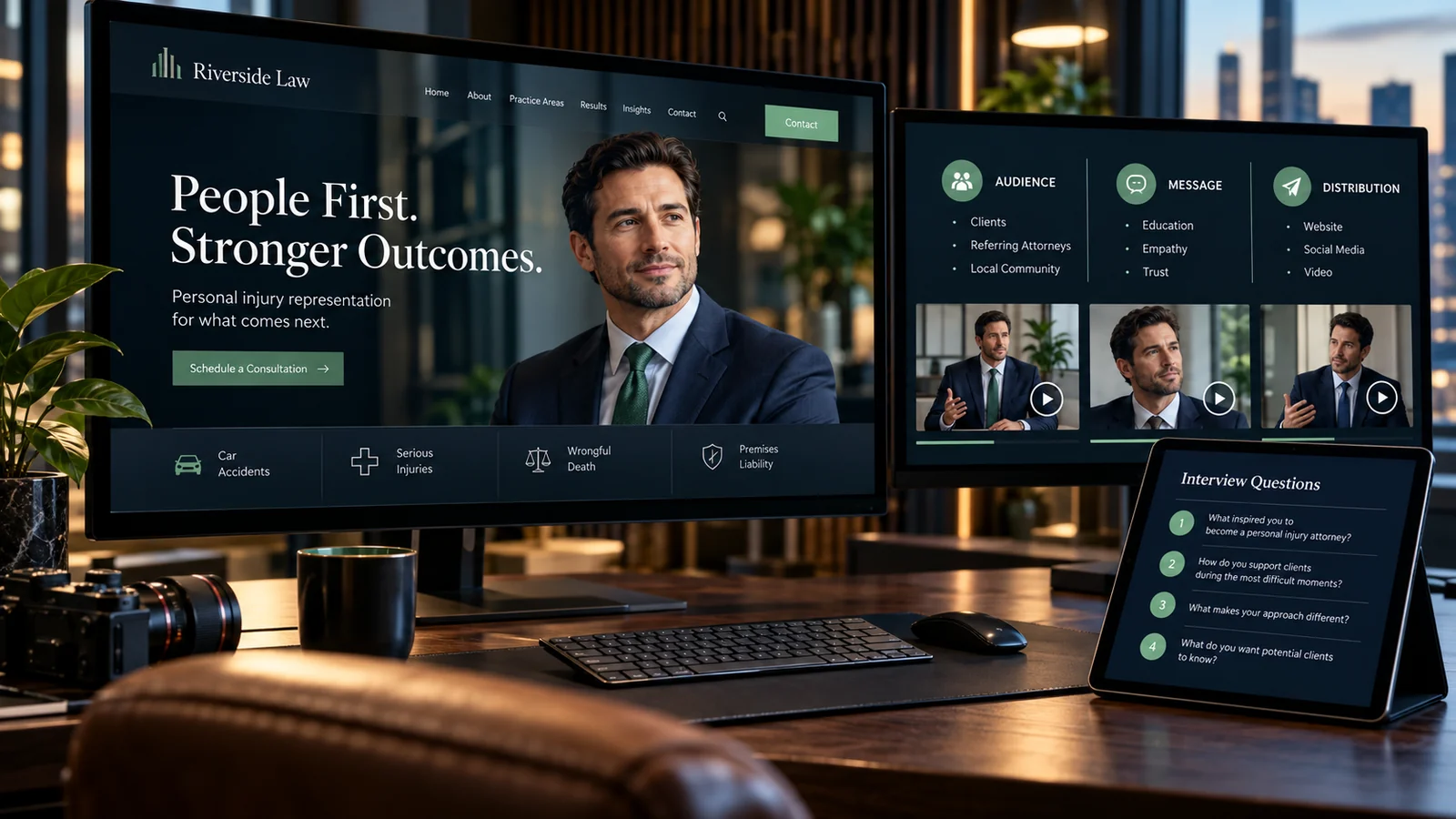
We connect credible attorney expertise to a clear position, a repeatable content program and the places your audience pays attention.
HOW WE EXECUTE
Find the credible difference
We examine audience needs, the firm’s experience, service model and evidence that can support a distinct message.
Attorneys substantiate experience. Gadient directs positioning.
What you receive
Positioning brief and evidence requirements
How we check it
The differentiator is specific and supportable, not an unsupported superlative.
Scope, access and responsibilities are agreed for your firm. This describes our service process, not a claim of a particular client outcome.
Start with the people and matters you want to serve.
Your firm’s position should make its relevance clear to a prospective client. Define the desired audience, case types, geography, and situations in which your approach is valuable.
We work with leadership to connect that position to business priorities. A useful message needs to be distinctive, understandable, and supported by what the firm actually does.
For firms focused on injury matters, connect positioning to the personal injury growth strategy.
Turn a broad promise into a usable positioning brief.
Swipe or scroll the table sideways to view every column.
Define strategy, content direction and production separately.
We guide consistency and review whether the message reaches the intended audience. The firm supplies authentic expertise and approves legal claims. Deliverables, production capacity and review responsibilities are agreed before work begins.
- Brand strategy: audience, positioning, evidence requirements and message hierarchy.
- Attorney content direction: subjects, source material, speaking/content briefs, approval standards and distribution priorities.
- Visual direction: a creative brief and review criteria for designers that support the position.
- Separately scoped production: design assets, filming, editing, website development and channel publishing. Existing staff or partners may own these assignments.
Coordinate this work through fractional CMO leadership.
Turn an attorney’s expertise into a recognizable public voice.
Personal branding starts with what the attorney can credibly teach, explain, or demonstrate. We define an audience, a distinctive point of view, and a message that reinforces the firm’s position. A founder and an associate may need different roles in that plan.
Deliverables can include attorney profile direction, recurring editorial themes, speaking topics, content briefs, and an approval process. The firm supplies real experience and approved evidence. Production can remain with internal staff or creative partners; we guide consistency and distribution.
Review recognition among relevant audiences, substantive conversations, and attributable or self-reported inquiries. Follower counts alone do not establish business value. Build connections to the firm’s owned website and CRM so the program can outlast a single social platform.
Develop the people delivering that message through internal marketing-team coaching.
Build the message on evidence you can stand behind.
Review the firm’s relevant experience, service approach, client questions, and reasons prospects choose or decline it. Identify claims that can be supported and obtain appropriate review and permissions for testimonials or case material.
Avoid treating a broad promise of personal service as the whole position. Explain what the client can expect from the process and why that matters in the situation they are facing.
Carry the promise into the conversation.
Campaigns, landing pages, intake scripts, consultation instructions, and referral conversations should tell a coherent story. If an advertisement creates expectations the intake team cannot meet, conversion and trust can suffer.
Evaluate how the message works across the channels and languages the firm uses. Clear next steps and plain explanations are part of positioning, not only website usability.
Make sure the promise survives the handoff into intake conversations and follow-up.
Give your team direction it can use.
The agreed engagement can produce an audience and positioning brief, a message hierarchy, practice-area language, proof priorities, and direction for creative partners.
- Who the firm is trying to reach and which needs matter most.
- The value proposition and evidence supporting it.
- Messages for the website, campaigns, intake, and referral partners.
- Creative briefs, review responsibilities, and evaluation criteria.
Place the messaging work inside a measurable marketing strategy with clear audiences, channels, and responsibilities.
Evaluate relevance as well as attention.
Review qualified inquiry mix, prospect questions, conversion reasons, and the team’s ability to communicate the position. Use those observations alongside campaign performance.
The goal is a clear, credible reason for the right people to choose the firm, with a practical way for your team and partners to express it.
Connect recognition to a structured business development and referral program.
COMMON QUESTIONS
Before we talk.
Is branding available as part of fractional CMO work?
Yes. Positioning and messaging can be included where they support the firm's growth priorities. A separate branding project can be discussed based on the work required.
Does this include a new logo or website?
Those deliverables depend on the agreed scope. Strategy, messaging, visual direction, design production, and development should be defined clearly before work begins.
YOUR NEXT MOVE
Make your firm’s value easier to understand.
Start with your firm's goals, current structure, and the decision you need to make.
856-357-3540